
The Ambition In Men Is Eternal
The Duality Of Ambition And Its Fate Upon All Men

“Men rise from one ambition to another: first they seek to secure themselves against attack, and then they attack others.”
—Niccolò Machiavelli, The Prince, Chapter III
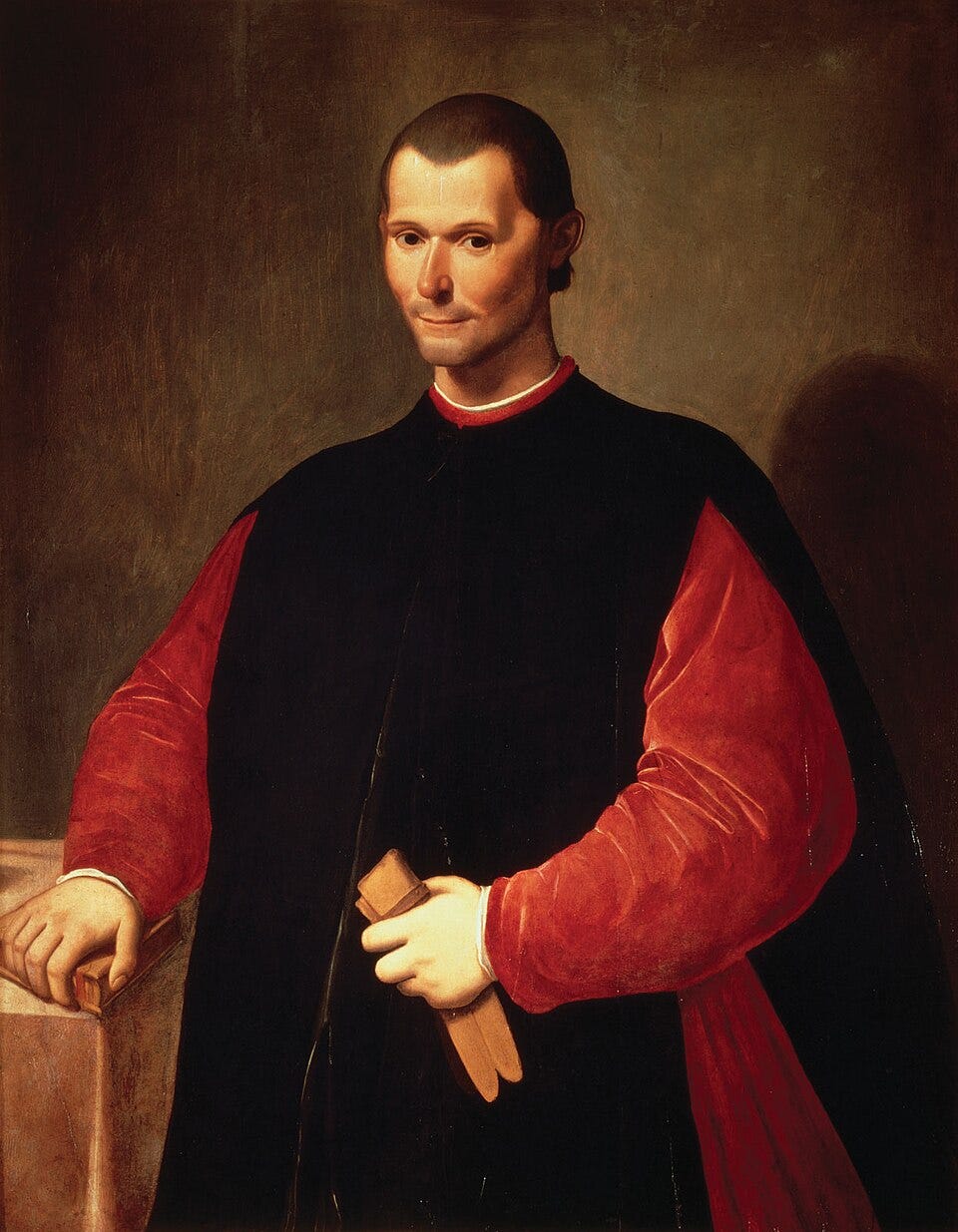
Men always have ambition and strive toward that ambition. This tendency possesses every human, not just men of power. It only seems as if men in power are the only ones with never ending ambition because their ascension is visible to everyone. In reality every single human has ambition and drives toward the future, it simply depends on the scale of a man’s ambition and whether he is known as a tyrant or a clerk. This quote by Machiavelli is important to understand because it lays out the basic formula of every person, but in an arena such as statecraft and power it is amplified into the distinction between failed politician and emperor.
A man who is ordinarily ambitious may strive to protect his family and preserve himself in the world, and with good fortune may even become wealthy. This also depends on a man’s station as well, though. For a family from within the ordinary populace this is usually the case, but a family from the elite or semi-elite sector of a society may strive for greater power, wealth, and influence.

A man who is immensely ambitious may drag himself from poverty into a position of power, wealth, or influence, if the circumstances favor him. The same applies to a man from the quasi-elite faction of society, but he has greater starting prestige, so he more frequently and more likely makes it into power and achieves more in his life.
You’ve been reading 1/2 of our content. Become a Paid Subscriber today and access all the benefits of PT Press.
Access to The Foundational Works and The Histories — our exclusive long-form series exploring power, civilization, history, and structural reality.
New premium essays every Thursday expanding our framework and your own mind with deeper historical and structural analysis.
Direct influence on what PT writes next through the PAID subscriber’s chat.
Instant access to the complete PT archive — 65+ essays, every framework, and every single piece of long form analysis we’ve ever published.
Join PT Press for just $8/month or $80/year
It should also be understood that there are those who have little ambition, and they may be the most dangerous of all men because they simply do not care whether they succeed or fail.
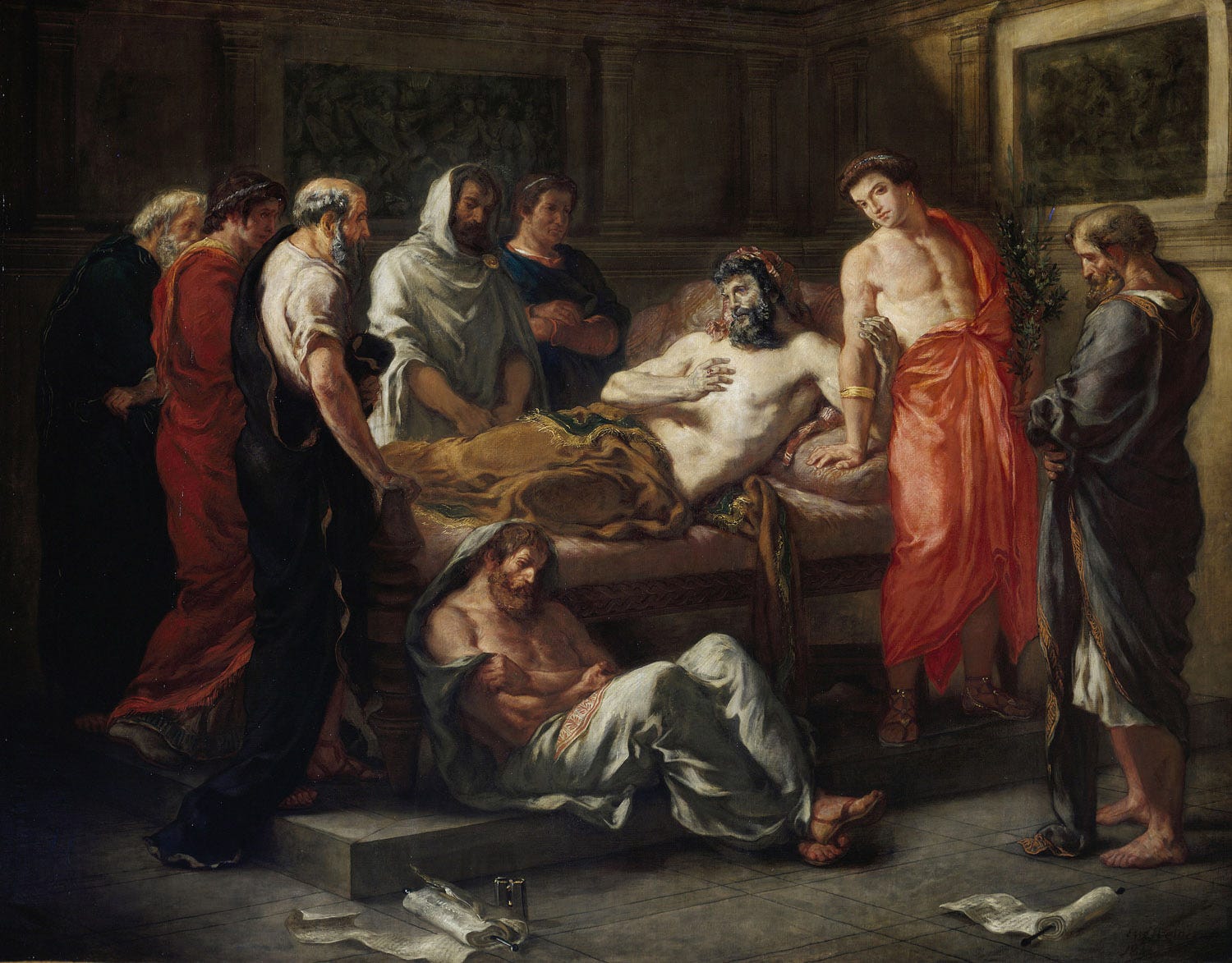
The fundamental and necessary state for every person to live in is security. If a position is secure, it is possible to start seeking greater ambitions. If a position is not secure, a person may spend their entire life fighting to keep their position with no ability to advance their own interests, because self preservation is paramount. Security in any position or state must be achieved before any ambition should be pursued. Otherwise, a person may overextend their influence and power and lose everything.
This mistake is often made by those who come from poverty and achieve power. They overextend themselves and lose their position because they risked far too much far too early. This is also part of never ending ambition, because they believe themselves to be more capable and worthy of greater power and influence.
The trap of never ending ambition is simple. A man who achieves his goals believes he can achieve his other goals, and as the achievements grow so does the ambition. Ambition eventually grows to an unsustainable level, so that even if his own position is secured he overextends himself anyway and collapses. It is human nature to continue to pursue and achieve more, an insatiable appetite for advancement. This happens most visibly in history and politics with great leaders and men of power.
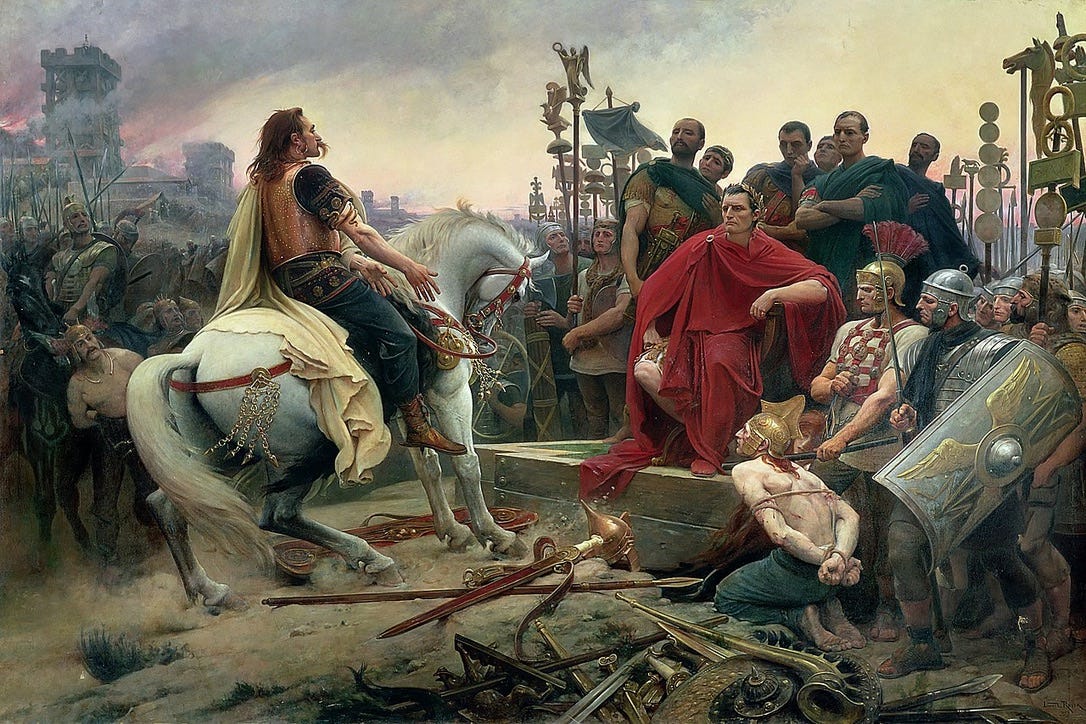
Julius Caesar came from a patrician family that had prestige but no influence. He was not poor, yet he was not influential and extremely wealthy. Caesar was an ambitious man who always stopped at nothing to achieve his next ambition. Every office, position, and military victory Caesar took was nothing but a stepping stone for his next ambition. With fortuna1 and ambition, Caesar rose from a minor noble to establishing the First Triumvirate. This informal arrangement, made with Pompey and Crassus, allowed the three of them to subvert and bypass the Roman Senate and establish direct control over all of Roman politics.
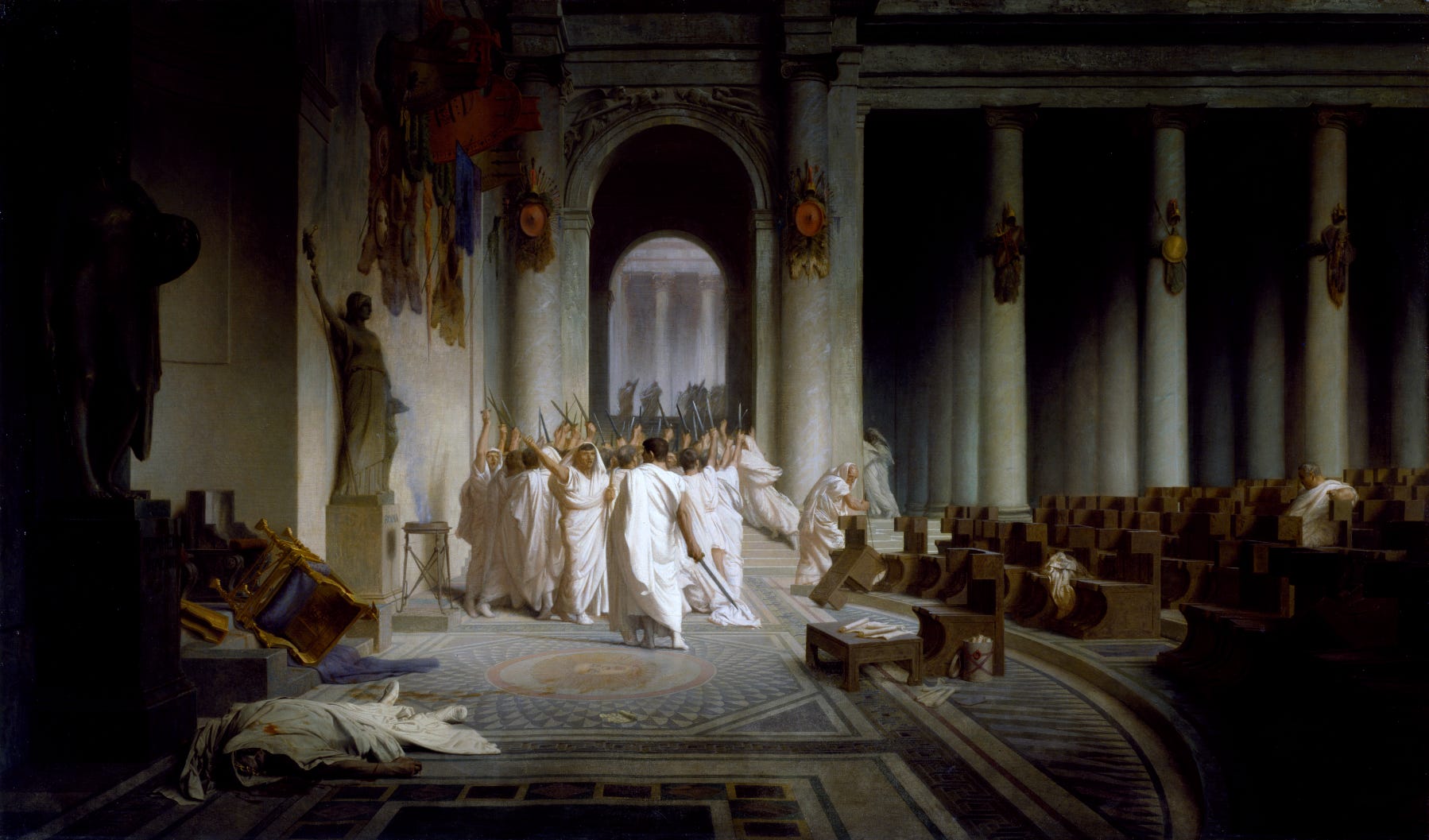
A more cautious and less ambitious man would have realized his position was secured and been more restrained in his future actions. Caesar was even more ambitious after the security of his power and influence. He launched the Gallic campaigns and achieved more than he could ever have dreamed of: immense wealth and power, the love of the masses, and an army more loyal to him than to Rome. His position had been wholly secured, leaving behind no doubts about his power and influence in Rome and throughout history. Caesar didn’t stop; his ambitions kept growing. He marched on Rome with his army, defeated his enemies, and became the emperor in all but name. He became the perpetual monarch and sole leader of Rome, and his honors grew as he was put onto the coinage and had months named after him. The senators knew that leaving Caesar unchecked would eventually lead to their own deaths or the total collapse of the empire because of the ambitions and insatiable appetite of Caesar. So they conspired to strike Caesar down on the Ides of March.
Build More Than Knowledge. Build a Library.
Every serious thinker inherits a tradition. The greatest ideas in history were preserved because they were collected, studied, and revisited, not simply consumed.
Logos Publishing is a monthly book club dedicated to building lasting libraries of philosophy, history, and political thought. Each premium edition is selected to earn a permanent place on your shelf.
If you’re building a library rather than a reading list, use code PT for 15% off your first order.
Join the Logos Publishing Book Club Below
This historical example shows the mechanism laid out in history: a man who is far too ambitious, never satisfied, eventually destroys himself after achieving everything and more than he had ever imagined. This pattern is repeated throughout history with figures like Napoleon and other great leaders. Their ambitions and drive brought about their destruction because of overextension and insatiable appetites for power, influence, and glory.
This is not merely a historical pattern, it repeats in modern political systems as well. It repeats in powerful ruling structures and institutions, it repeats in every environment where there is advancement and human competition. The only difference is scale. Men will attack others once they are secure, because ambition knows no bounds. It takes a truly restrained and wise man to know when to stop, and when to continue to press his advantages.
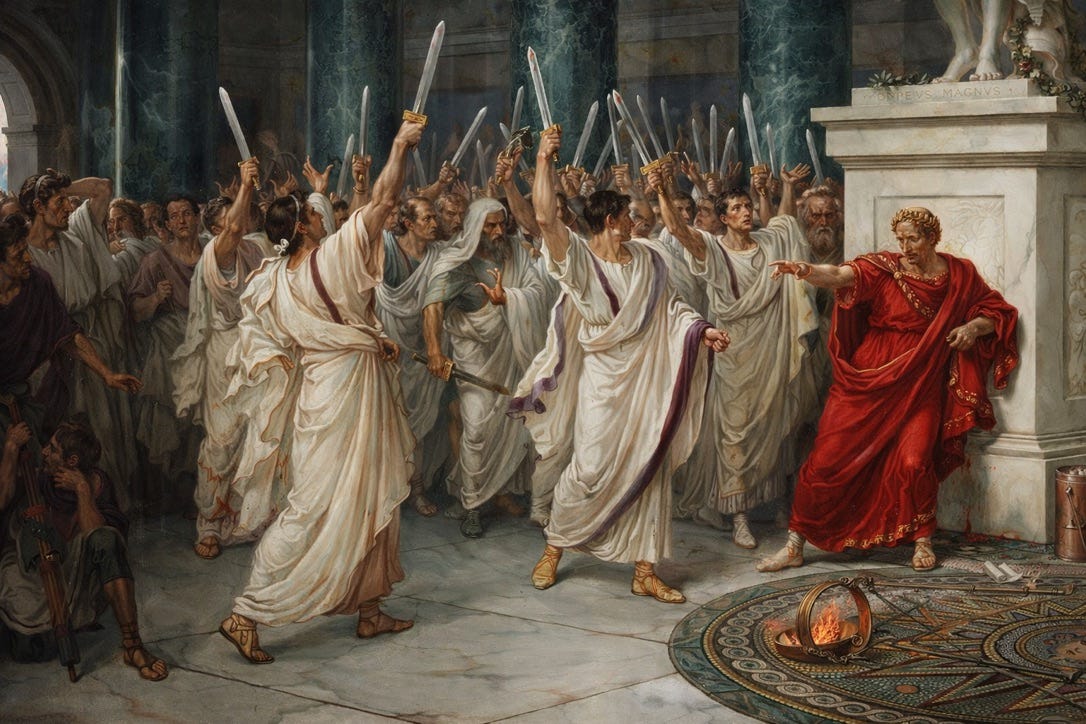
Ambition rules men, it continues to rule men, and it will forever, as long as humans exist, continue to rule all men.
Fortuna is the force of chance, circumstance, and unpredictable external events that acts on human affairs. As used here, the term follows Machiavelli's treatment of it in The Prince.