
The Crowd Cannot Rule Itself
Popular Sovereignty Is The Rule Of Appetite, Mistaken For The Rule Of Reason

“Civilisations as yet have only been created and directed by a small intellectual aristocracy, never by crowds. Crowds are only powerful for destruction. Their rule is always tantamount to a barbarian phase.”
— Gustave Le Bon, The Crowd: A Study of the Popular Mind (1895)
The idea of popular will as an effective form of governance is absurd. The will of the masses has always been shortsighted and fickle. History has shown, time and time again, that the masses will choose whatever benefits them most in the moment or satisfies their appetites in the short term. This allows the cunning to seize power through emotional rhetoric and false promises. The masses follow because they are persuaded by emotion rather than substance, and are not educated enough to tell the difference.

This is precisely the reason why popular will is such a volatile and frankly destructive form of decision-making, especially within the realms of politics and philosophy. It is often cited in the modern age that the choice of the people is the most rational way to choose leaders and officials for the halls of power. This assumption is built on the premise that every person is sufficiently self-aware and educated enough to make an informed decision on what will most benefit the people. While the idea that the people understand the needs and interests of the people best is excellent for a rhetorical political statement or speech, it is simply divorced from the reality of politics and the psychology of the masses.
The many consume. The few study.
You’ve been reading the abridged version of our content. Access these benefits by upgrading your subscription today…
Access to Foundational Works — PT’s exclusive long-form series unavailable to free readers
New full essays every Tuesday and Thursday, with potential weekend pieces
Direct Influence what we write about next in the subscriber-only chat
Full archive access — every essay, every framework, every structural analysis PT has published
Become one of the Few for only $8 a month or $80 a year
The greatest philosophers of the ages were rejected by the people of their society. It was not until decades or centuries later that their ideas and works were understood as useful and wise by the masses.
The greatest example of this was the philosopher Socrates of ancient Greece. He was charged with impiety and corrupting the youth. At the time, Socrates would challenge senior officials in the government and military experts through a line of questioning to expose the fact that they indeed knew very little of their profession. This Socratic questioning began destabilizing society because the experts among the people were being shown as frauds. Eventually the charges mentioned above were brought forth. A jury of five hundred citizens of Greece, who were largely farmers, found him guilty. This is an undeniable example of the masses deferring to the political authority of the city and projecting their own political grievances onto Socrates as a scapegoat.
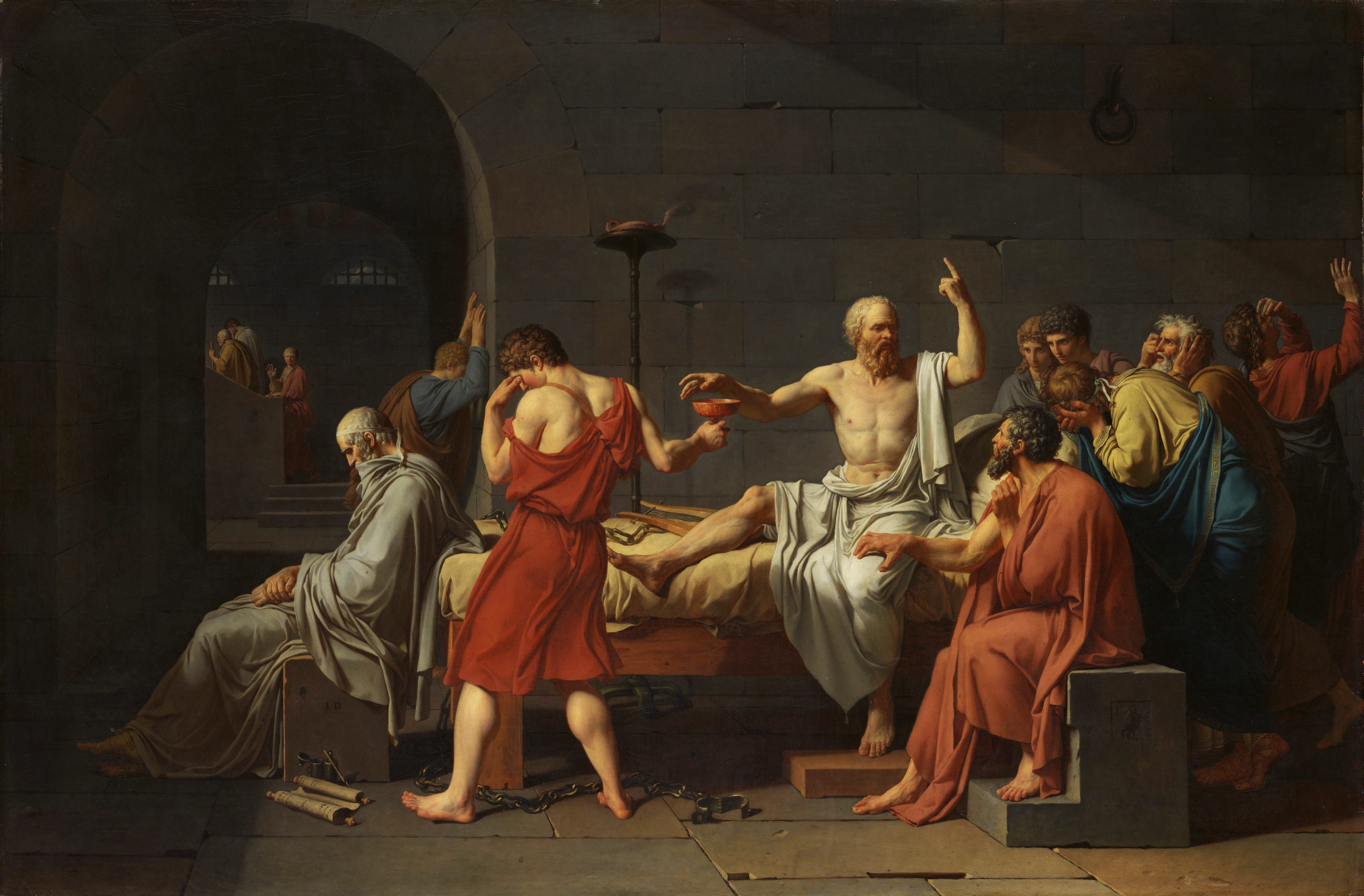
The argument can be made that Socrates was targeted by the elite of the city, but that does not matter very much, because the masses deferred and let their emotional and shortsighted nature override their sense of justice. They heard he was corrupting the youth with a poisonous ideology, and instead of inquiring, they allowed themselves to be used by the cunning and sentenced him to death. Instead of thinking for themselves and perhaps being made uncomfortable for going against the many they conformed to the consensus of the masses.
This is the first failure: the masses cannot distinguish the appearance of wisdom from wisdom itself, and so they deferred to authority rather than reason.
Plato also articulates this mechanism in his story of the cave. The men who remain trapped in the cave hate the man who was freed from his bondage and had seen the sun, not because they hated him, but because he shattered their illusion of reality.
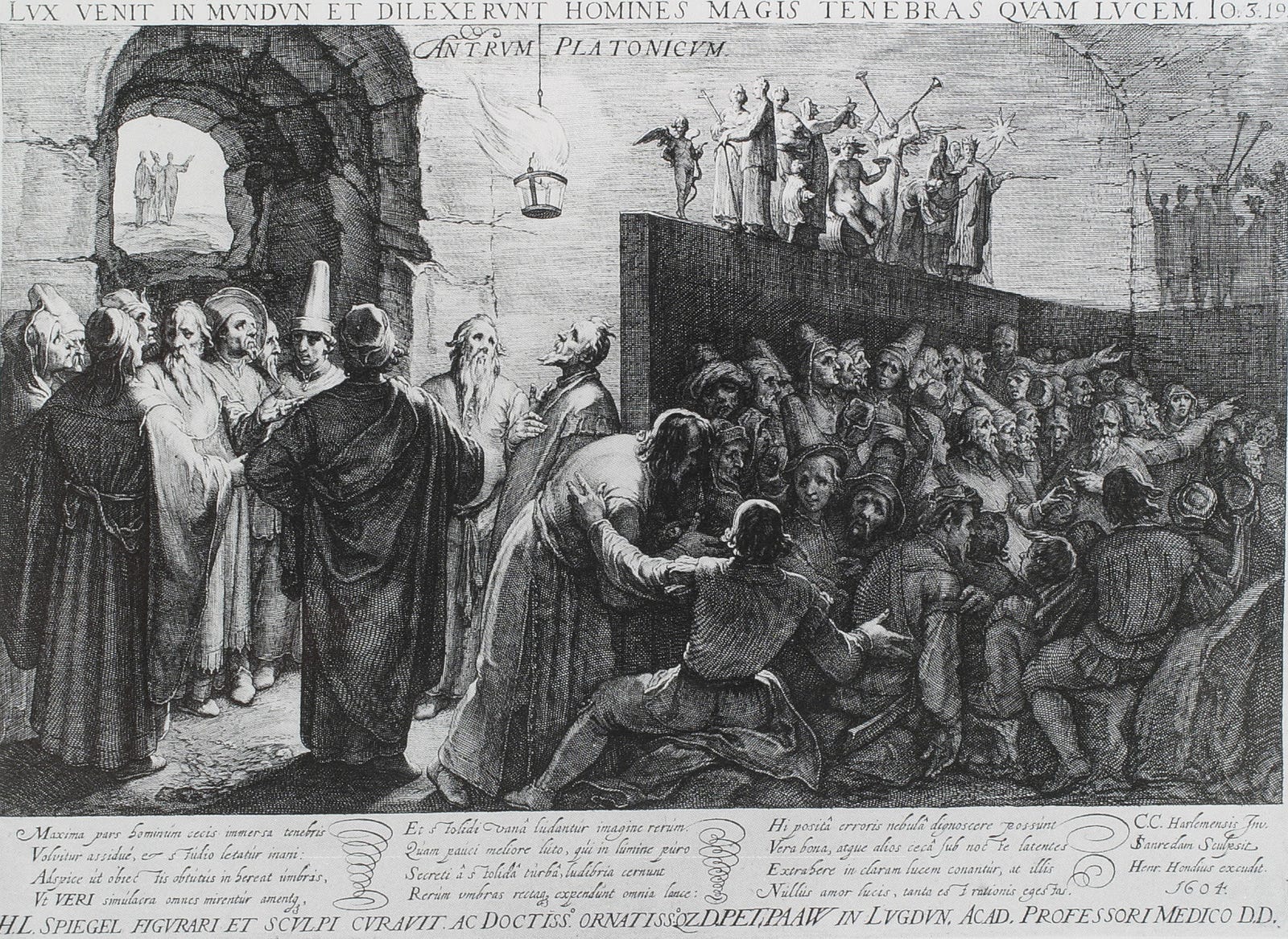
This is the second, and the more dangerous point: even when the truth is shown to them plainly, they will choose comfort over it, and punish whoever forces the choice. The masses despise those who destroy the illusion of their reality because it is much harder to think for oneself and be discerning than to allow oneself to be told what to think.
This is precisely the issue of popular sovereignty, because the masses cannot distinguish rhetoric from substance. This comes from a fundamental lack of understanding of politics that the masses never learn from.
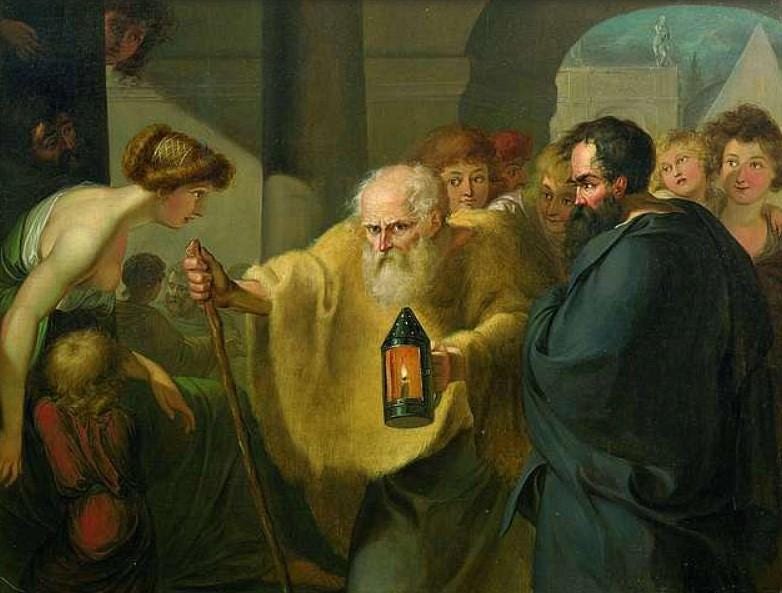
Popular sovereignty ignores the reality of man. It ignores the fact that men are fickle and vain. They are far more convinced by the appearance of wisdom and virtue than by a person who truly possesses those qualities. This allows those who are not the most capable, or those who wish to exploit their position for personal gain, to take positions of power. This in turn results in the degradation of government, either through ignorant and destructive policies or through the replacement of competent, capable men in positions of power with loyalists who are far less capable and far more destructive.
These are the destructive effects of popular will: a degraded government and performers who are not capable of competent governance.
This happens because the masses are not capable or educated themselves in the art of politics, most of the time. The masses are not able to think freely outside of societal restrictions and norms to assemble a worldview or philosophy that is radically different from what they currently believe or have inherited from their society. Popular will is not an effective form of governance but a vain popularity contest where the winners get to control the most powerful institutions in a society. It is also a mechanism that weakens a society over time as the people grow more distant from the romanticized ideals of their founding.

The masses are, by and large, fools, easily swayed because they believe themselves not to be. This allows those who are educated and cunning in the art of politics to easily ascertain and seize popular will and power in a society governed by it. This pattern repeats until eventually a society has been so ruined by the exploitation of the cunning that destruction becomes inevitable.
A thoughtful and provocative essay. I agree with much of your critique of mass psychology, especially the danger of emotional capture and short-term appetite overwhelming long-term reasoning.
But I wonder if the deeper issue is not whether the masses are rational or irrational.
From a systems perspective, that may not even be the central variable.
The more important question may be whether a civilization still retains the capacity to absorb uncomfortable feedback, detect errors, and self-correct over time.
In that sense, governance may be less about selecting the wisest rulers and more about preserving robust error-correction mechanisms.
Even highly capable elites can fail catastrophically if institutions suppress negative feedback. Conversely, even imperfect democracies can remain adaptive if they allow reality to continuously challenge power.
As someone who spent years working with complex dynamical systems and weather prediction, I’ve learned that resilience rarely comes from eliminating noise altogether. It comes from building systems that can learn from error.
That missing dimension, I think, deserves equal weight in the discussion.
Perhaps the greatest danger is not the ignorance of the crowd, but the loss of a civilization's ability to accept correction.