
The French Revolution and the Democratic Myth
Modern education did not teach you about revolution. It taught you a civic religion.

The idea of revolution is a fundamentally misunderstood concept in modern education. Modern institutions and the education complex love to romanticize revolution as a sacred narrative built on democratic virtue.
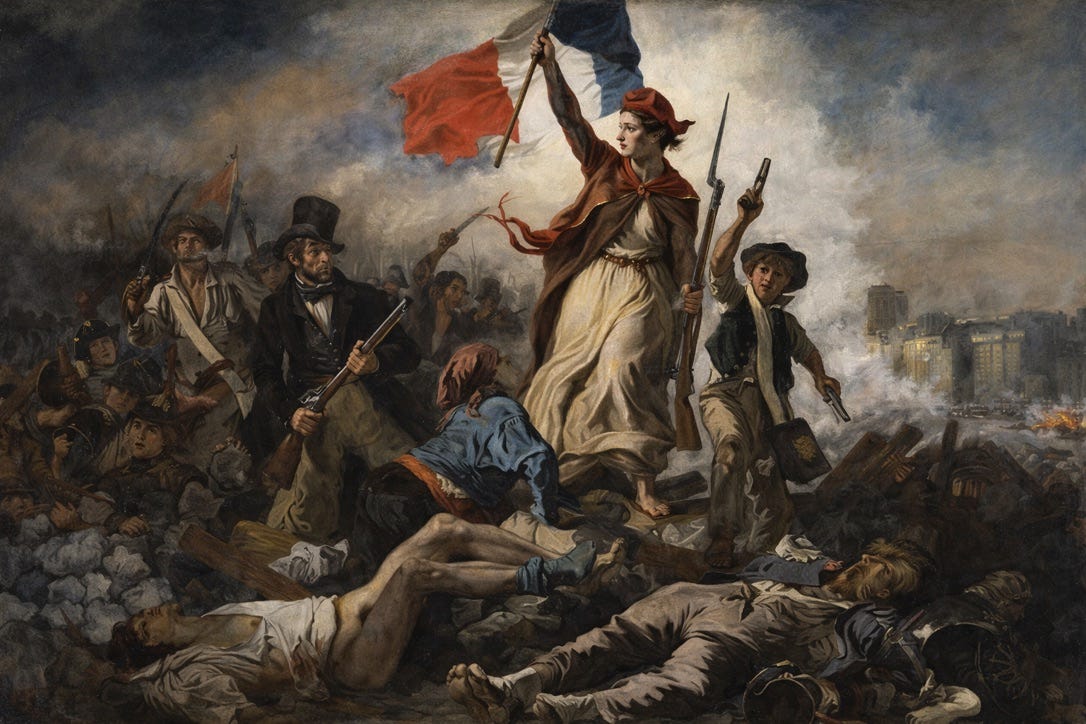
In reality, the only romanticized revolutions that modern education highlights are in a very limited time period. The revolutions romanticized are those that take place near the American Revolution. Not because revolution never existed before, but because those revolutions were not about democracy but about power, survival, or conquest.
These revolutions are scarcely mentioned because they serve no functional purpose in building up the modern civic religion of democracy. Revolution as an expression in society has existed for all of recorded history, stemming from real or perceived systemic issues in a society. The revolutions heavily focused on in modern education, like the American and French Revolution, are always mischaracterized and told through an ideologically biased lens of democracy as the paramount form of rule.
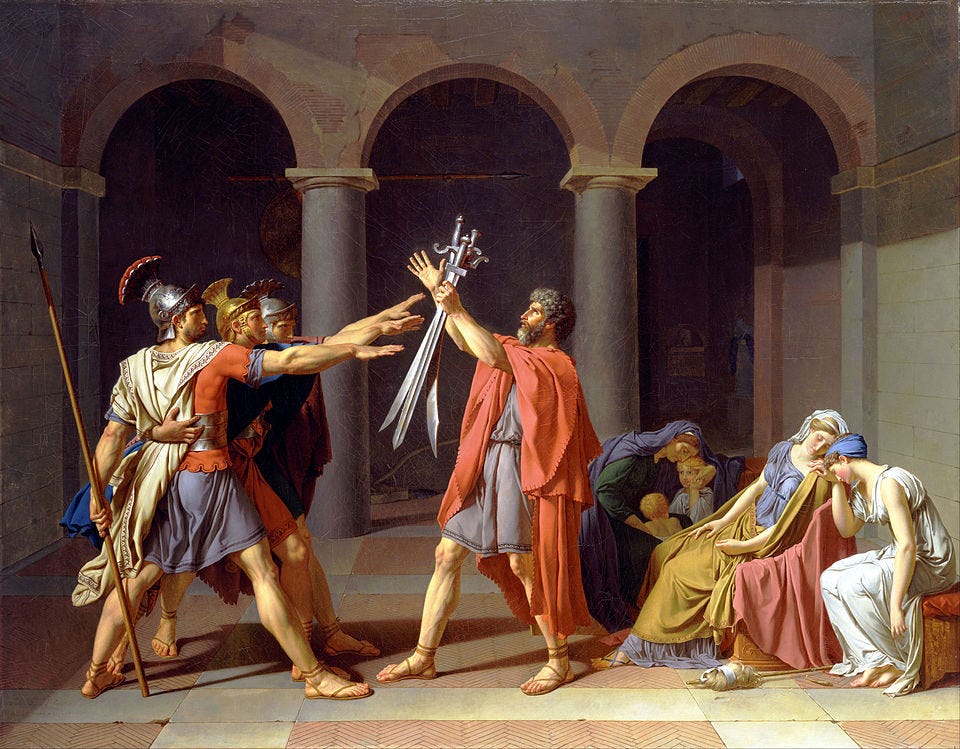
When in fact these revolutions were fought for the same reason as many others have been: those with real power felt slighted and marginalized, so they conscripted the masses through emotional messaging and false promises of freedom. The democracy framing is especially useful to obfuscate the mechanics of revolution because it is the civic religion and the accepted western normative form of government. In reality, every revolution meets these rules.
