
The Lie Of Power
How Moral Framing Obscures Reality

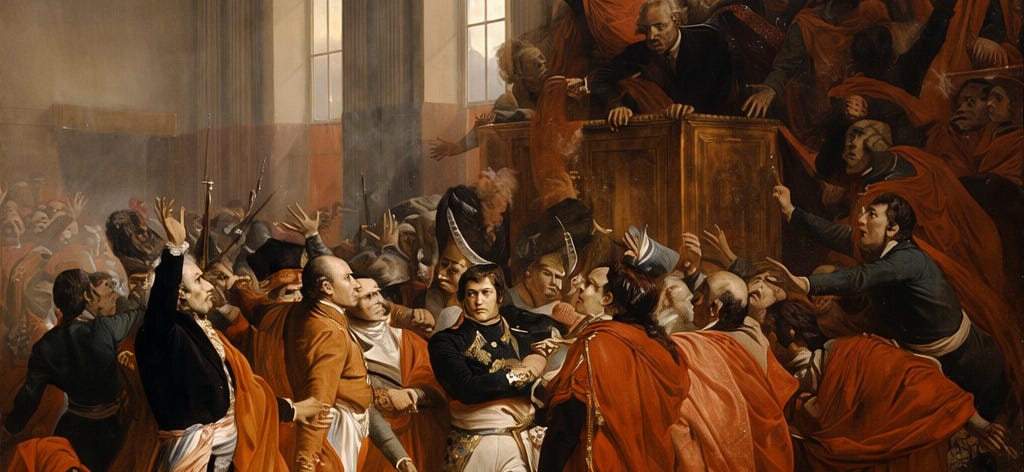
Many people believe that power is inherently evil or a malicious force moving through the world. This is a false notion. The idea that power is always evil is an example of moralization. People take a subject of great nuance and depth and collapse it into a simple label of good or evil1. They do this not because they genuinely believe power itself is evil, but because moral binaries are far easier mental models to hold. They reduce complexity and provide immediate emotional clarity. As a result, power is often framed as an enemy, particularly by those who do not possess it. Many believe that no one should be able to affect their life except themselves.
In reality, power at its core is a system of leverage over others through incentives, influence, and institutional position. There are many additional ways in which power can be acquired or exercised, but cataloging them is irrelevant to the point at hand.
Power is not moral or immoral by itself. The easiest way to illustrate this principle is through a metaphor everyone understands. Power is like money. Money can be used to help those in need, build necessary infrastructure for communities, support charitable efforts that advance the less fortunate, and serve the general public good. Money can also be used for morally gray or outright harmful purposes. It can be used to lobby politically for causes that damage a country’s citizens, to gain leverage over political figures and shape policy for personal gain, to fund media operations that manufacture narratives favorable to the wealthy, or to finance private military contractors in pursuit of control and profit.
These examples demonstrate that money is neither good nor evil in itself. It is simply a tool used to execute human intention. Power operates in the same way. At its core, power is leverage over another person or group, and that leverage can be applied toward constructive or destructive ends. Power is a tool. It can be used to suppress dissent in ways that harm the public, or it can be used to protect vulnerable individuals from those who seek to exploit them.
Paid subscribers get access to a subscribers-only chat to shape future ideas, and this work is supported entirely by readers. Please consider subscribing below.
History makes this distinction clear.
The Committee of Public Safety was granted extraordinary power during the French Revolution to preserve order and defend the state from internal collapse. That power, initially justified by crisis, became self-reinforcing. Legal safeguards dissolved, suspicion replaced evidence, and authority was used to eliminate rivals rather than restore stability. The damage arose not from power’s existence, but from its detachment from restraint and accountability.
By contrast, Lucius Quinctius Cincinnatus was granted absolute authority during a moment of existential threat to the Roman Republic. After resolving the crisis and restoring order, he voluntarily relinquished power and returned to private life. The mechanism was identical: concentrated authority. The outcome differed entirely because the objective was resolution, not preservation of control.
History and logic make these distinctions clear: power is not a malicious force. It is a neutral force that can be used to improve lives or to destroy them. Many people do not think about power through this framework, not because they are incapable of logical thought, but because their assumptions and worldviews have never been meaningfully challenged or examined in depth.
Most people do not consider the logical extensions of their own beliefs because they never questioned those beliefs in the first place, they have only inherited them through repetition and authority. In modern society, many simply consume. They do not think; they consume social media and other forms of media that tell them what to think, and they adopt those conclusions without scrutiny. This may appear irrelevant, but it is precisely the mechanism by which the ability to perceive nuance is lost.Those who only consume and never think for themselves become subject to prevailing opinion, which is fickle and often irrational. This is why power is so easily perceived as evil. It is not because power has been understood and rejected, but because the judgment has been inherited rather than reasoned. Power is labeled evil first, and have never been required to examine why it is evil.
Power is not a moral category. It operates through leverage, incentives, and constraint. The outcomes of power are defined by the desires of those who wield it. Power itself is not evil. To believe that power, by its mere existence, is evil is to obscure reality rather than understand it. Those who see power for what it is, a tool, possess a far greater advantage than those who reject this fact. Do not reject reality. Embrace your advantage.
The terms good and evil have been used frequently above. They are employed here as a framing device to make the ideas coherent and accessible. A serious examination of good and evil requires far more depth and contemplation than is necessary for their use in this context.