
The Modern Machiavellian I
The Illusion of Modern Morality

The Modern Machiavellian is our latest installment in our exclusive Foundational Works series. This book explores how Machiavelli was not cruel but simply honest. It will reveal how modern morality is performance. It will not be a comforting read. This series will be cold and based on realism, not idealism. If you truly want to see reality and become one of the few, continue forward.
The Foundational Works series is our paid subscribers’ exclusive series. It covers more raw and unfiltered ideas that the free content cannot. If you would like to become a paid subscriber you can subscribe below and access the series. The Foundational Works also includes the six-part series on The Hollow Empire.
The figure presented in short-form content is often distorted for emotional impact. The real Machiavelli was not a villain, nor an advocate for cruelty. He was a clear-sighted observer of human nature and the mechanics of power. His writing emphasized realism, stability, and the need to understand how people actually behave, not how they claim to behave. This insights follow that tradition of analysis rather than the sensationalized versions adapted for entertainment.
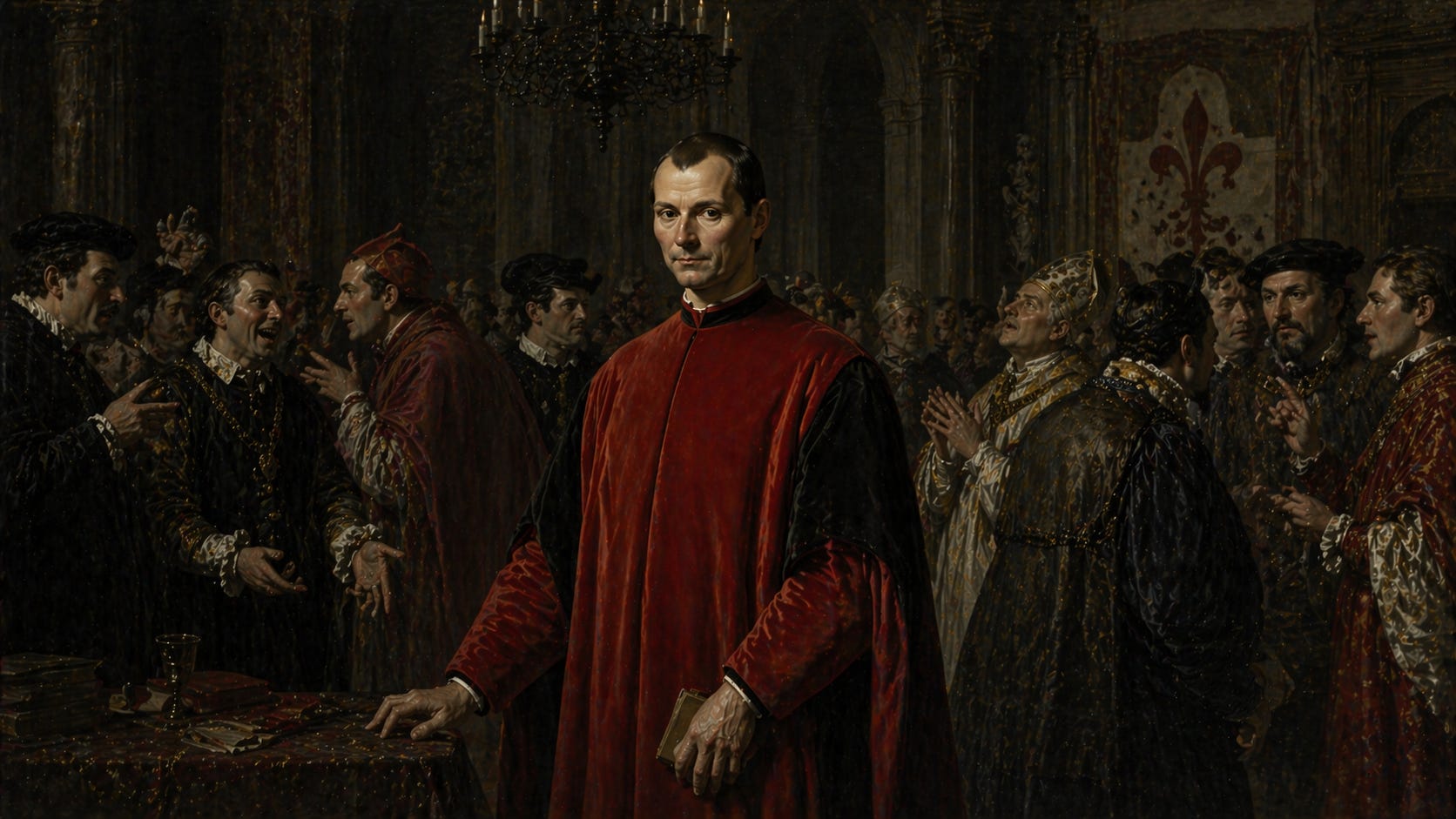
Section 1: Human Nature and the Illusion of Modern Morality
People like to believe they have evolved beyond the instincts that shaped ancient power. They haven’t. What has evolved is the packaging, the language, the optics, the narratives we use to pretend our motives are noble. But beneath the branding, human nature is exactly what it has always been: fearful, self-preserving, status-driven, responsive to incentives, and dependent on perception.
Modern morality is not the triumph of enlightenment.
It is the triumph of optics.
We no longer admit that we seek advantage. We prefer to disguise it as “boundaries,” “self-care,” or “standing up for ourselves.” We don’t admit fear; we call it “prudence.” We don’t admit opportunism; we call it “alignment.” The language has softened, but the instincts have not. And the softer the language becomes, the harder it is to see the machinery underneath.
This is why modern power is more subtle.
Not because human beings are better, but because they have become better at concealing their drives even from themselves.
Machiavelli understood something that remains true today: people will always do what aligns with their incentives, even when their stated values contradict their behavior. This is not hypocrisy, it is human nature attempting to reconcile instinct with self-image. When a person must choose between what they want and what they claim to believe, instinct wins and morality serves as the excuse after the fact. In a world obsessed with appearances, this instinct hasn’t disappeared. It has simply become invisible to the people who act on it. And nothing is more dangerous than a force someone uses unconsciously.
